1 hr 30 min
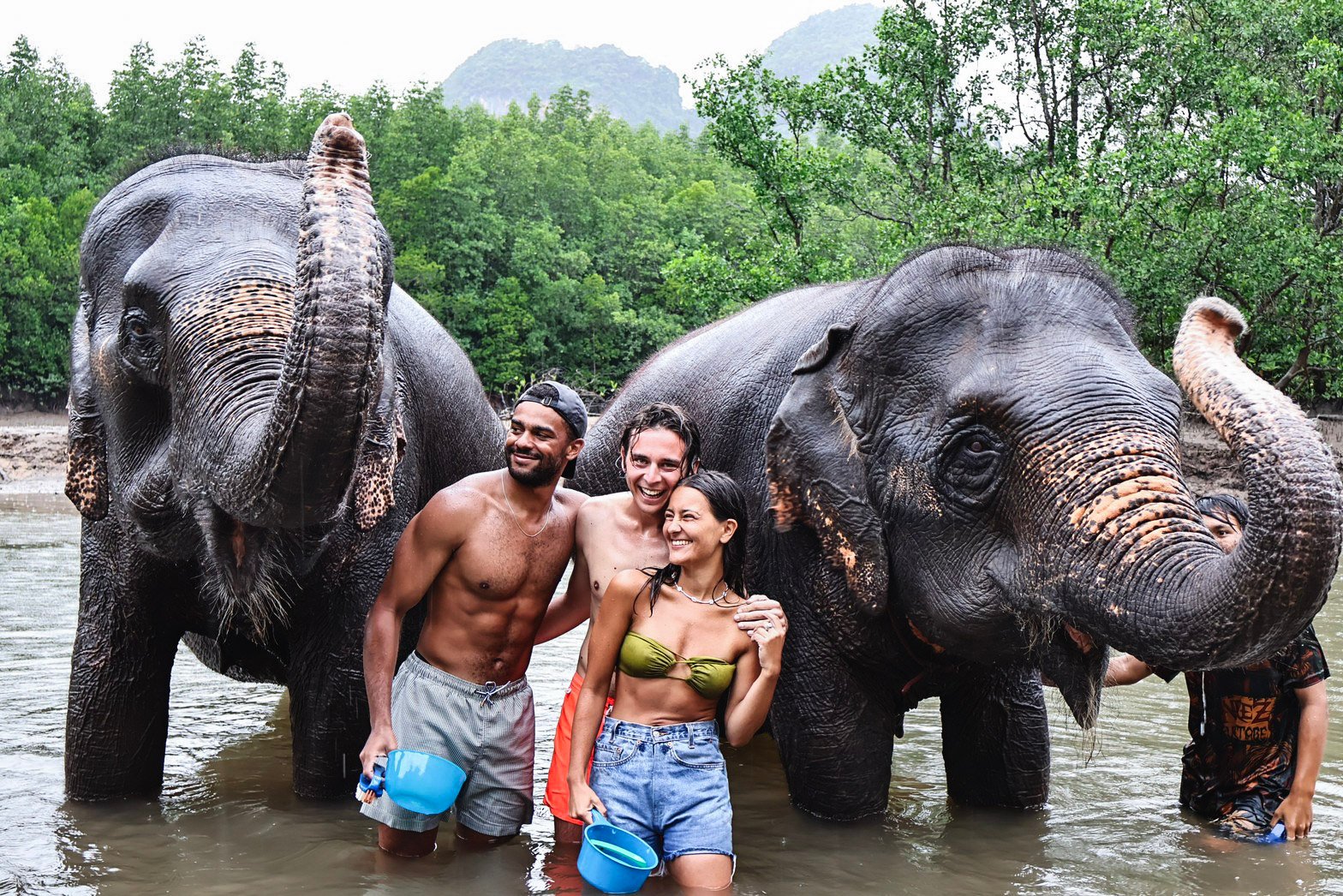
Elephant Bathing Experience at Krabi Shelter
Join elephants for their daily cooling ritual in a tropical jungle setting with feeding and bathing.
Reserve
Hand-picked by our editors — only the best 5 ethical programs from 18 reviewed.
Verified partners for every tour, free cancellation where available, and instant confirmation on every booking.
1 hr 30 min
Join elephants for their daily cooling ritual in a tropical jungle setting with feeding and bathing.
Reserve
3 hr
Get close to rescued elephants at this ethical sanctuary—feed, bathe, and play in the mud with gentle giants.
Reserve
2 hr
Watch rescued elephants roam freely while offering treats and painting a keepsake bag in Krabi's peaceful sanctuary.
ReservePrices from verified partners. Availability updates in real time at checkout. Free cancellation policies apply where shown.
The landmarks, rooms, and views travelers on this tour remember — all visible on a single visit.
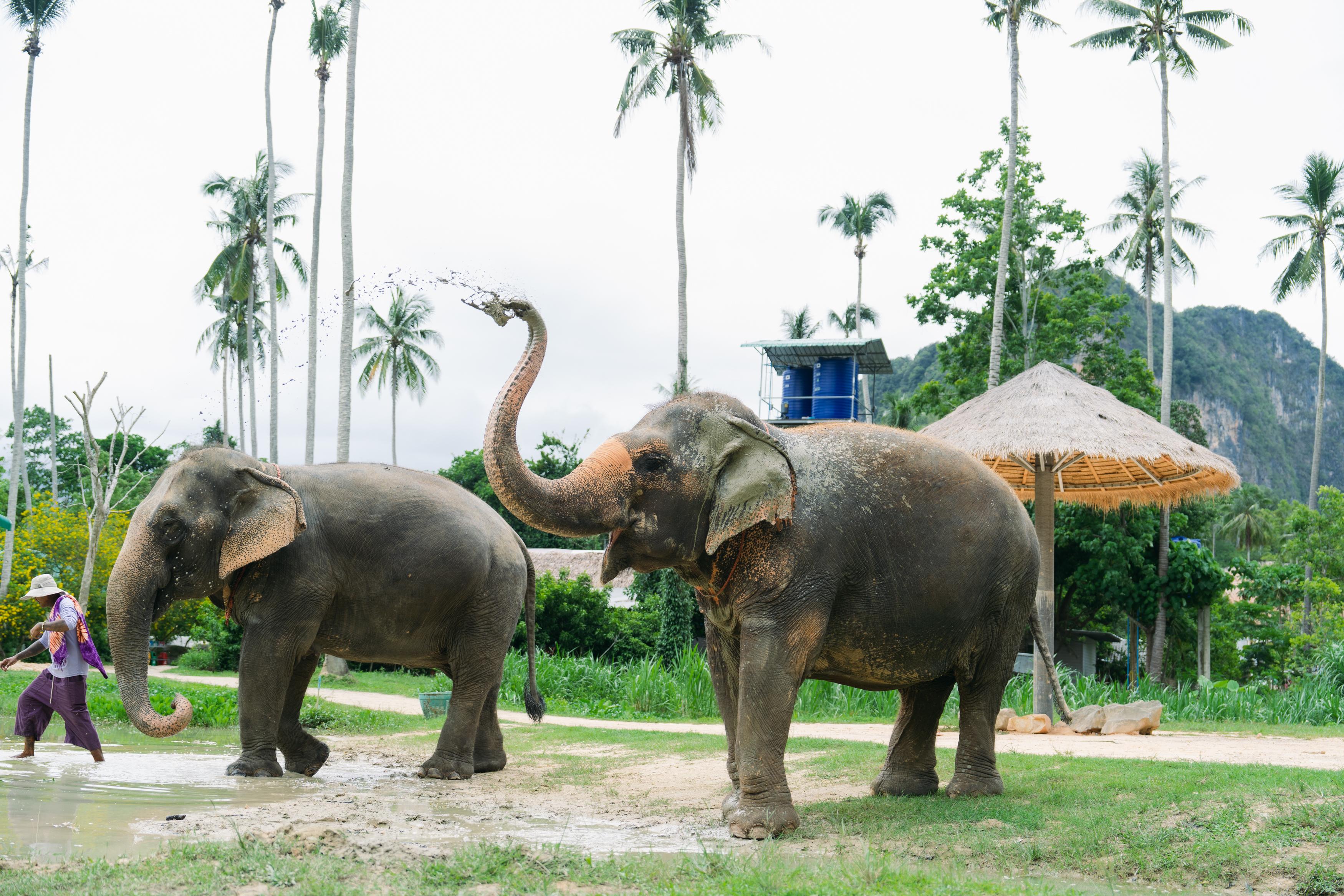
The natural mud bath is a critical part of the elephant skincare routine, helping them regulate temperature and protect skin from insects.
Learn from local experts about the history and behavior of these majestic creatures.
Guests get to prepare and hand-feed the elephants, which helps build trust and connection.
Take a guided walk through the protected forest to see how the herd interacts in a natural habitat.
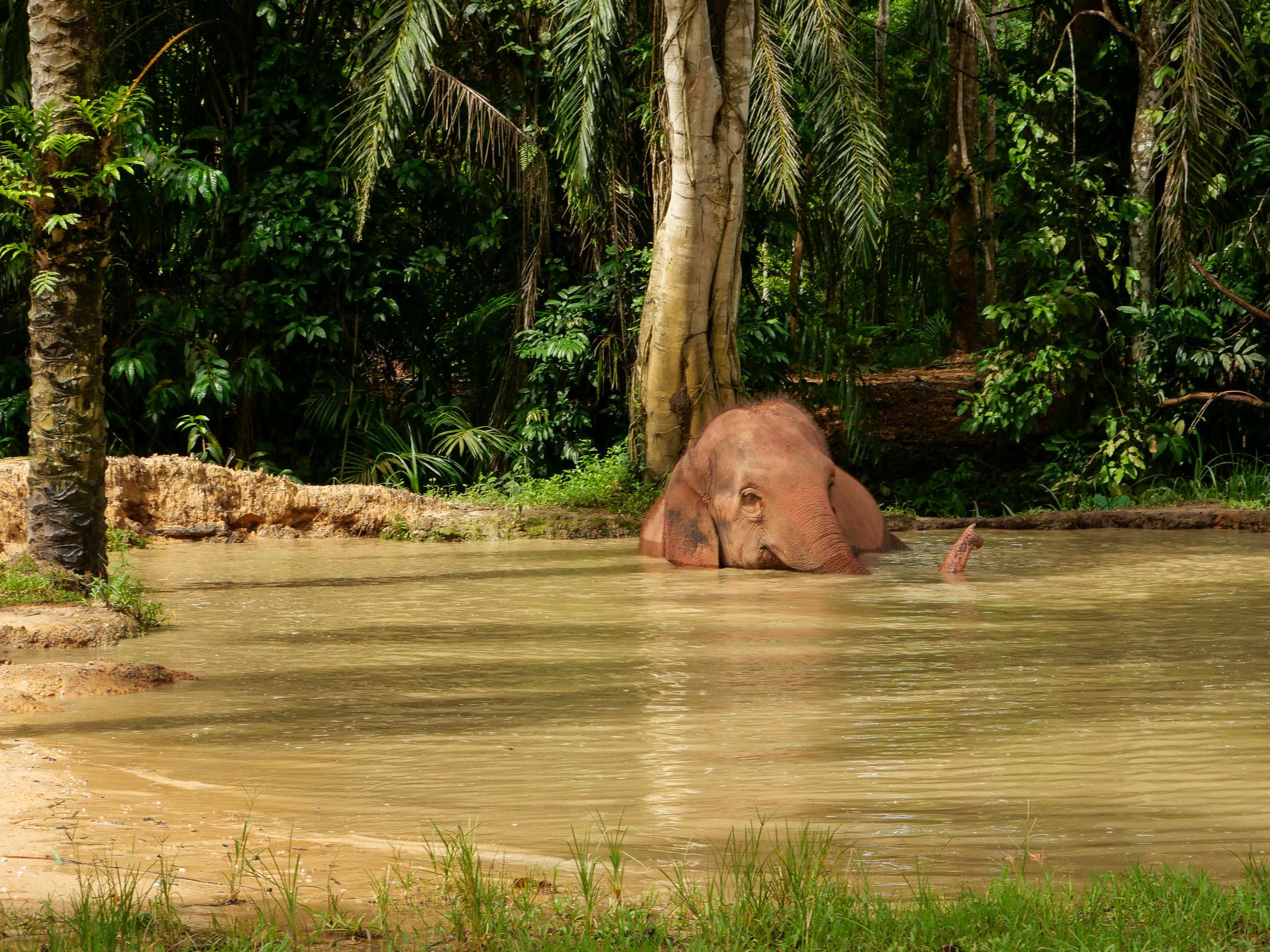
After the mud, elephants enjoy this refreshing pond to clean off and engage in social play.
Krabi Elephant Shelter offers a more intimate, observation-led experience, while Ao Nang Elephant Sanctuary provides a traditional hands-on engagement for those seeking elephant mud bath krabi tours.
| Feature | Top pick Krabi Elephant Shelter | Ao Nang Elephant Sanctuary |
|---|---|---|
Core Ethical Focus |
No-ride observation | No-ride rescue focus |
Typical Group Size |
Small intimate groups | Larger group capacity |
Terrain and Setting |
Forested mountain valley | Open grassland and jungle |
Mud Bath Intensity |
Gentle guided sensory play | Active group bathing sessions |
Interaction Depth |
High-proximity ethical observation | Hands-on feeding and bathing |
| See tickets → |
Verdict: Choose Krabi Elephant Shelter if you prefer a quieter environment, or book an elephant mud bath krabi tour at Ao Nang Elephant Sanctuary for a social, interactive animal encounter using elephant mud bath krabi tickets.
Choose your ticket, select your date, and reserve in under two minutes. Secure checkout handled by our verified partner.
Instant confirmation by email, with a mobile voucher you can save offline. No printing, no queuing at a collection desk.
Arrive at the entrance, show your voucher on your phone, and walk in. Most tickets include priority or skip-the-line access.
Practical details for your visit straight from our verified partners — hours, access, rules, and how to get there.
344 M.4 Aonang, Meuang Krabi
Main reception area for elephant mud bath Krabi tours
Direct transfer is the most reliable way to reach the sanctuary from Ao Nang
Follow signs toward the shelter located in the Aonang area
Wear light, quick-drying clothing and sturdy sandals or shoes that can get dirty during the elephant mud bath Krabi activity. Swimwear is recommended for those participating in the water-based portions of the elephant care program.
Keep belongings minimal as you will be interacting with animals in natural environments. Secure lockers may be available at the Krabi Elephant Shelter reception area.
Photography is encouraged during your elephant mud bath Krabi session to capture ethical animal interactions. Please avoid using flash to prevent startling the elephants.
The sanctuary features natural, uneven terrain throughout the site. Guests with mobility concerns should discuss requirements with Krabi Elephant Shelter staff before booking.
Mobile phones are permitted for photos but should be kept in waterproof pouches during water activities. Reception may be intermittent in remote forest areas.
Families are welcome, and the experience provides educational insights into elephant welfare. Supervise children closely at all times while near the animals.
Complimentary drinking water is provided during the elephant mud bath Krabi tour. Lunch is often included in specific full-day care programs.
Animals and pets are not permitted on the premises to ensure the safety and comfort of the resident elephants.
The elephant mud bath Krabi experience supports sustainable sanctuary practices. Participants should follow all instructions given by the mahouts to ensure animal safety.
344 M.4 Aonang, Meuang Krabi
Main reception area for elephant mud bath Krabi tours
Get directionsBest time to go, insider tips, nearby landmarks, and the cancellation fine print — flip through to skim what matters to you.
How crowds, weather, and events shift across the year.
August offers lush green landscapes despite intermittent rain showers. Mornings provide cooler temperatures for an elephant mud bath Krabi visit.
November to February features dry, comfortable weather. This is the peak season, so book Krabi Elephant Shelter programs in advance.
March and April are hot and dry. Focus on early morning sessions to avoid peak midday heat.
September and October experience higher rainfall. The sanctuary remains operational and the mud pits are particularly active.
Small details that turn a good visit into a great one.
Reserve your elephant mud bath Krabi tour in advance to secure preferred morning time slots.
Carry a reusable water bottle during your visit to the shelter.
The handlers have deep knowledge of the animals; follow their lead to maximize your interaction.
Ensure your chosen elephant mud bath Krabi tour promotes ethical, hands-off observation and care.
Only bring essential items to the sanctuary to keep your hands free for the elephants.
Non-bookable sights within a short walk — free to visit, easy to pair.
A popular stretch of sand known for dramatic limestone cliffs and sunset views
A prominent white Buddhist temple located on a hill overlooking Krabi Town
A challenging hiking trail offering panoramic views of the coastline and surrounding islands
A sacred cave located on the southern tip of the Railay Peninsula
Flexible, no hidden fees.
Full refunds are typically available if cancellation is requested at least 24 hours prior to the scheduled tour. Please refer to your specific booking confirmation for details regarding the 0 THB entrance fee structure.
Hand-picked options within walking distance — pick a district for vibe, or a specific hotel for convenience.
Beachfront resort with proximity to tour meeting points
Comfortable stay located in the heart of the Ao Nang area
Eco-friendly property surrounded by lush tropical gardens
Thailand banned elephant riding in tourism venues across Krabi Province in 2020, converting forty-two camps into observation-only sanctuaries within eighteen months. Krabi Elephant Shelter emerged from that legislative shift as one of seven facilities granted permanent rehabilitation permits by the Department of National Parks, Wildlife and Plant Conservation. The 12-hectare site shelters eleven elephants retired from logging concessions in Surat Thani and Phang Nga, the youngest a fourteen-year-old female named Ploy who arrived in 2019 with untreated leg fractures from chain tethering. Elephant mud bath Krabi programs center on thermoregulation behavior rather than entertainment. Asian elephants lack sufficient sweat glands and rely on external cooling; mud creates an evaporative layer that drops skin temperature by up to eight degrees Celsius while deterring parasites. The shelter's two natural clay wallows — fed by a groundwater spring that maintains 24°C year-round — allow the herd to self-regulate bathing frequency. Visitors observe from a bamboo platform or, in supervised small groups, assist mahouts in applying mud to the elephants' flanks and ears. The activity is noncoercive; elephants enter the wallow only when ambient temperature exceeds 30°C, typically between 10:00 and 14:00. The shelter operates under a veterinary partnership with Mahidol University's Faculty of Veterinary Science, which conducts quarterly health assessments and publishes an annual welfare audit. Each elephant receives a daily diet calibrated to body mass: Ploy consumes 180 kilograms of vegetation, including banana stalks, sugarcane tops, and foraged bamboo, supplemented with mineral blocks. The feeding protocol prohibits processed foods; the bananas visitors offer during interaction sessions are estate-grown Gros Michel cultivars, selected for lower sugar content than commercial Cavendish varieties. Revenue from elephant mud bath Krabi tour bookings funds the shelter's operating budget and a regional rescue fund that has relocated six elephants from unlicensed roadside exhibits since 2022. Morning sessions run 09:00 to 12:30, afternoon sessions 13:30 to 17:00, with group sizes capped at twelve to minimize stress on the herd.
"Mud creates an evaporative layer that drops skin temperature by up to eight degrees Celsius while deterring parasites."
A step-by-step walkthrough of the visit — what you'll see, how long each stage takes, and the details that matter.
You arrive at the shelter's bamboo pavilion by 09:15, where a mahout briefs your group on proximity rules and hand signals the elephants recognize. Cotton tunics and rubber boots replace street clothes; the mud carries a mineral tang that clings to fabric. You walk a gravel path through banana groves to the first wallow, where three elephants — Ploy, an older bull named Somchai, and a matriarch called Noi — stand chest-deep in grey clay. The mahout demonstrates: scoop with both hands, press gently onto the shoulder, let the elephant's movement guide your rhythm. Ploy leans into your touch, ears fanning slowly. Mud slides across her hide in uneven sheets, collecting in the creases behind her knees. Somchai submerges entirely, then surfaces with clay dripping from his tusks. You spend thirty minutes at the wallow, silent except for the mahout's low Thai phrases and the wet percussion of trunks slapping water. Afterward, you rinse the elephants with well water from a wooden trough — Noi showers herself, trunk coiled like a hose, while you scrub Ploy's back with a coconut-fiber brush. The session ends with feeding: you hold banana stalks flat on your palm, and the elephants' trunks curl around them with a dexterity that feels almost conversational. By noon you're back at the pavilion, boots heavy with dried clay, watching the herd retreat into forest shade.
Krabi Elephant Shelter is open daily from 09:00–17:00.
There is no standalone 0 THB entrance fee, as costs are bundled into pre-booked care programs.
The best arrival window is 09:00–12:00, as morning sessions offer cooler temperatures and more active elephant behavior.
The shelter welcomes all ages, though families should supervise children during all elephant mud bath krabi interactions.
Wear clothes that can get messy and sturdy shoes; swimwear is recommended for the water portions of your elephant mud bath krabi tour.
Photography is allowed, and visitors are encouraged to capture their elephant mud bath krabi experience ethically.
Transportation is generally arranged at the time of booking your elephant mud bath krabi tickets.
You can book your elephant mud bath krabi visit via the official site at https://www.keskrabi.com.
Cancellations must be made 24 hours in advance for the elephant mud bath krabi to ensure a full refund.
Complimentary water is provided, and some full-day elephant mud bath krabi programs include a traditional lunch.